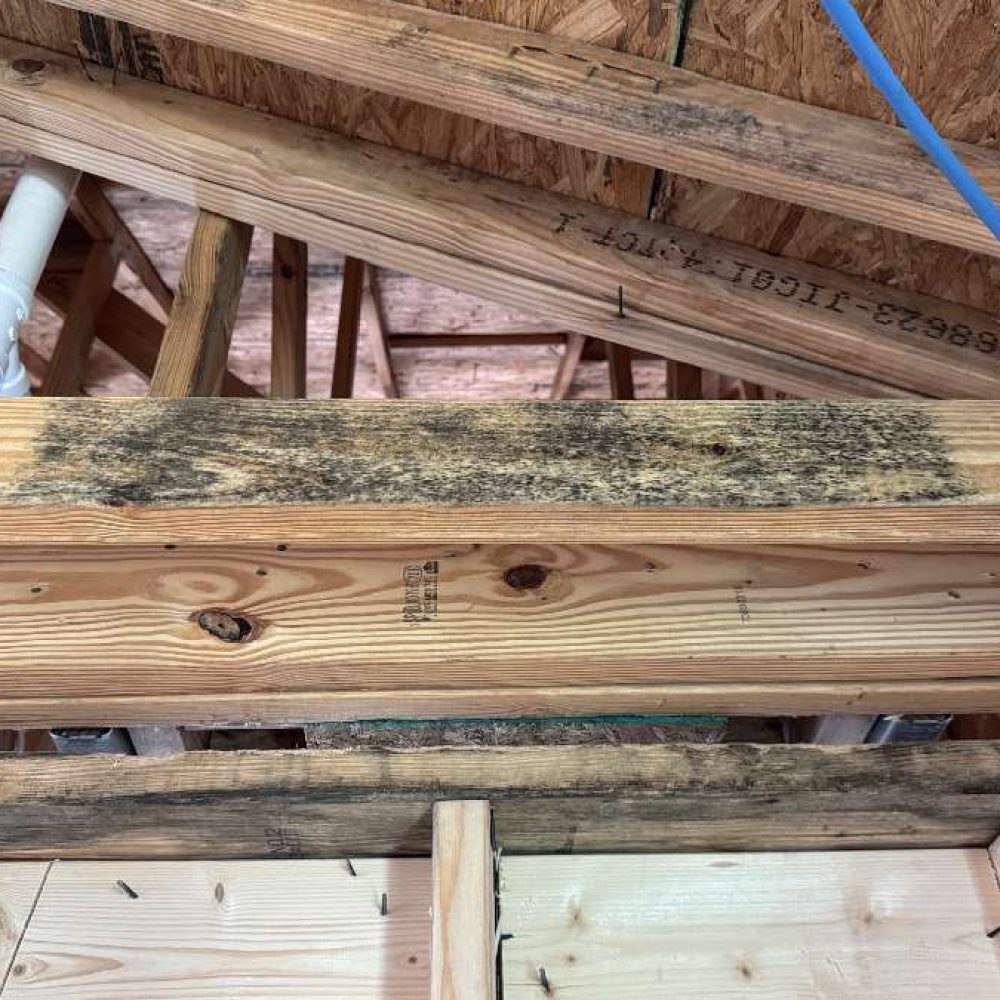
Seeing mold or dark staining on framing lumber in a brand-new home can be surprising, but it happens more often than many buyers realize. During construction, lumber may be exposed to rain, high humidity, or prolonged moisture before the home is dried in. If wet framing is covered with insulation and drywall before it has had a chance to properly dry, that moisture can become trapped inside the wall cavity.
Why Mold Can Develop on New Construction Lumber
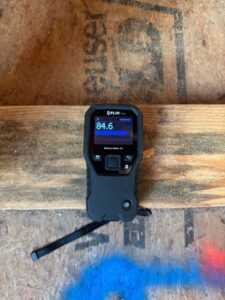
Wood naturally absorbs moisture. During construction, framing can become wet from rain, plumbing leaks, roof leaks, or simply Florida’s high humidity. The concern is not just that the lumber got wet. The bigger question is whether the material was allowed to dry properly before the walls were closed. When I perform a pre-drywall inspection, I look for visible staining and suspected organic growth and use a moisture meter to check framing in areas that appear wet or questionable. As a general reference, wood framing should typically be below approximately 19% moisture content before being enclosed. Elevated moisture readings should be evaluated and corrected before drywall installation.
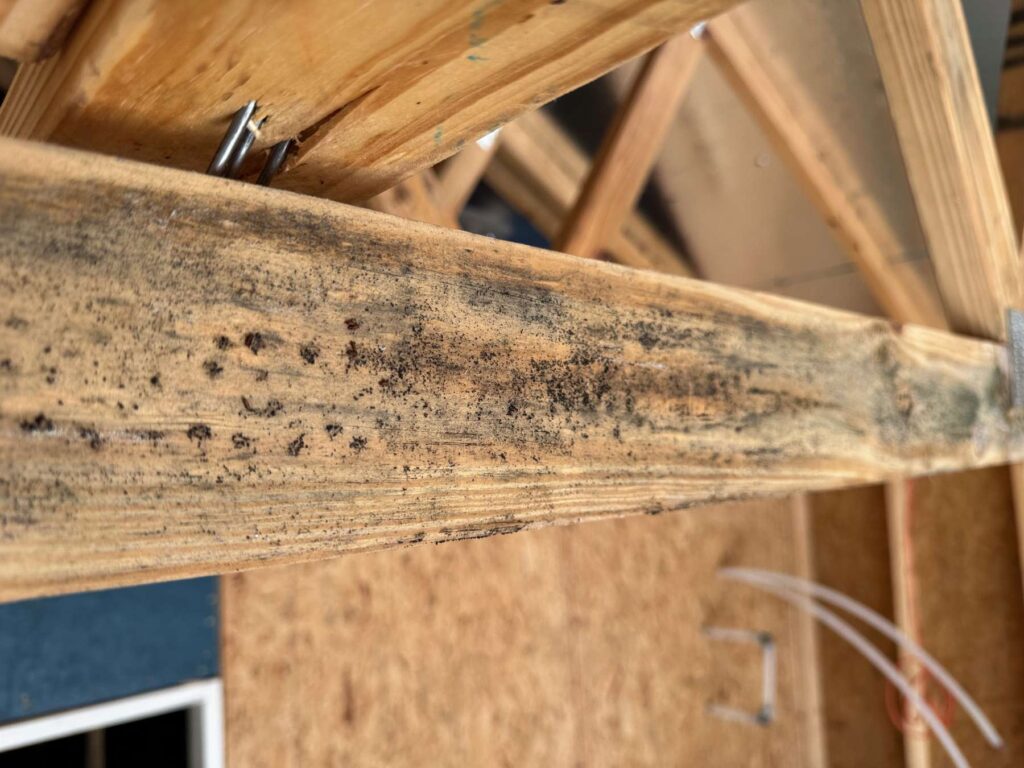
Is Every Dark Spot Mold?
No. Dark discoloration on lumber can come from dirt, lumber stamps, natural wood characteristics, water staining, or construction debris. However, staining combined with elevated moisture or visible organic-looking growth deserves further evaluation. A visual inspection alone cannot always identify exactly what type of growth is present. When necessary, additional mold testing may be appropriate.
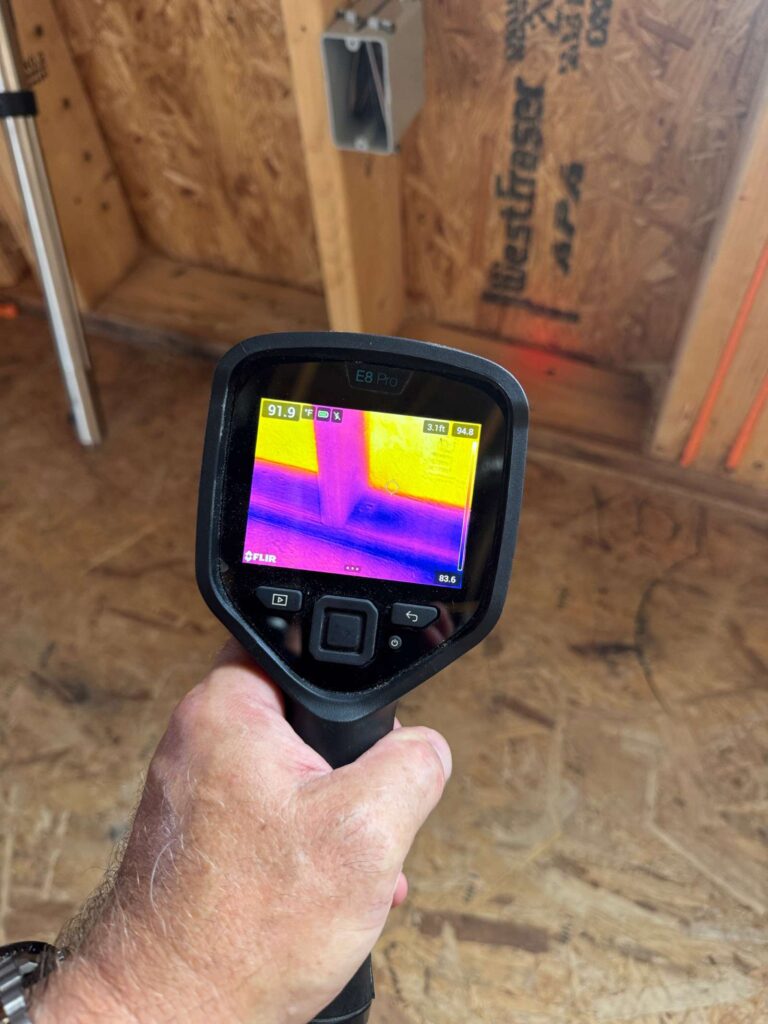
Why Covering Wet Framing Can Become a Problem
Installing drywall over wet or contaminated framing can conceal the issue rather than correct it. Trapped moisture may contribute to:
- Mold growth inside wall cavities
- Musty odors
- Damage to drywall and insulation
- Deterioration of wood materials
- Indoor air-quality concerns
- Expensive repairs after the home is completed
- Correcting wet framing during construction is typically much easier than opening finished walls later.
What Should the Builder Do?
If elevated moisture or suspected mold-like growth is discovered, the affected areas should be evaluated before insulation and drywall are installed. Depending on the conditions, correction may include properly drying the framing, cleaning affected surfaces, addressing the source of moisture, and confirming acceptable moisture levels before the walls are closed. Simply painting, covering, or concealing the staining is not a proper substitute for addressing the underlying moisture condition.
This Is Why Pre-Drywall Inspections Matter
Once insulation and drywall go up, much of the framing, plumbing, electrical wiring, HVAC ductwork, and structural connections will never be this accessible again. A third-party pre-drywall inspection gives the buyer an opportunity to identify visible construction defects and moisture concerns while they can still be corrected relatively easily.
At Bobcat Home Inspections, I inspect accessible framing for moisture concerns using visual observations, moisture-meter readings, thermal imaging and detailed photo documentation. Every pre-drywall inspection is about one thing: finding concerns before the walls hide them.
Bobcat Home Inspections – Looking out for you.
Serving Jacksonville, St. Augustine, St. Johns County, Ponte Vedra, SilverLeaf, Nocatee, and surrounding Northeast Florida communities.